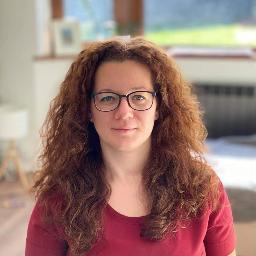
Madalina TruscaBACP
Insightful counsellor for relationships and identity
Helps with LGBT · Relationship · Trauma and Abuse
Counsellors seeing people online
25 counsellors name Romanian among the languages they offer sessions in.
Therapy in your native language can help you express emotions and life experiences with greater ease and clarity. Browse Romanian-speaking therapists below to view counsellor profiles and find someone who lists Romanian among the languages they work in.
Insightful counsellor for relationships and identity
Helps with LGBT · Relationship · Trauma and Abuse
Practical support for stress and life changes
Helps with Stress & Anxiety · Addictions · Eating Disorders
Supportive counsellor for stress and relationships
Helps with Stress & Anxiety · Relationship · Family
Experienced BACP counsellor focused on practical change
Helps with Stress & Anxiety · Relationship · Trauma and Abuse
Compassionate person-centred support for life changes
Helps with Stress & Anxiety · Relationship · Grief
A practical, listening-driven counsellor
Helps with Relationship · Family · Depression
Calm, practical therapy for life changes
Helps with Stress & Anxiety · Relationship · Family
Practical psychotherapy with a collaborative focus
Helps with Stress & Anxiety · Relationship · Parenting
Existential-integrative psychotherapist connecting meaning and recovery
Helps with Stress & Anxiety · Trauma and Abuse · Grief
Compassionate integrative therapy for practical change
Helps with Relationship · Family · Trauma and Abuse
Compassionate counsellor helping untangle repeated patterns
Helps with Stress & Anxiety · Family · Grief
Compassionate, relationship-focused counselling
Helps with Relationship · Family · Grief
Supportive person-centred counselling
Helps with Stress & Anxiety · Grief · Parenting
Practical, compassionate counselling for life challenges
Helps with Stress & Anxiety · Relationship · Family
Compassionate, relational psychotherapy for life changes
Helps with Stress & Anxiety · Relationship · Trauma and Abuse
Practical, compassionate counselling for complex challenges
Helps with Addictions · Relationship · Family
Empathic counsellor for stress and loss
Helps with Stress & Anxiety · Relationship · Family
Psychodynamic and trauma-informed counsellor
Helps with Stress & Anxiety · Relationship · Grief
Compassionate counsellor blending nursing and therapy
Helps with Stress & Anxiety · Relationship · Family
Compassionate counsellor using flexible, evidence-informed care
Helps with Stress & Anxiety · Trauma and Abuse · Grief
Empowering change with practical therapy
Helps with Stress & Anxiety · Addictions · Trauma and Abuse
Helping adults find steadiness and self-belief
Helps with Stress & Anxiety · Self Esteem · Depression
Integrative counsellor focused on practical support
Helps with Stress & Anxiety · Trauma and Abuse · Career
Warm, practical counselling with an empathic approach
Helps with Stress & Anxiety · Trauma and Abuse · Grief
Compassionate, person-centred support for trauma and change
Helps with Stress & Anxiety · Trauma and Abuse · Self Esteem
We will earn a commission if you sign up through our link, at no extra cost to you.
When you speak in the language you learned at home, you often access memories, metaphors and ways of feeling that do not translate easily. Words that carry cultural meaning, humour or family associations can shape how you understand yourself and your relationships. Having a therapist who speaks Romanian allows you to use those nuances without needing to repeatedly translate or search for equivalent expressions. That tends to make conversations feel more natural and can help you describe complex states of mind with greater precision.
Beyond vocabulary, language frames how we think about suffering, resilience and hope. You may find that certain idioms or ways of describing distress resonate more with your experience. A Romanian-speaking counsellor can pick up on those cultural cues and respond in ways that reflect shared references, making it easier to build a therapeutic conversation that feels relevant to you.
Language barriers can create friction in therapy even when both people have some command of a second language. You might find yourself simplifying feelings, avoiding metaphors, or relying on general terms that do not convey the intensity or specificity of your experience. That can lead to frustration, a sense of being misunderstood, and slower progress because important details get left out of the conversation.
Misunderstandings are not only about vocabulary. They can arise from different cultural expectations about communication style - for example whether emotion is expressed directly or more reservedly, how family roles are discussed, or what kinds of personal details are considered appropriate. Therapy in Romanian reduces the need to mediate those differences through translation and allows you to explore emotional material in the language that best carries it.
Online therapy typically follows the same therapeutic structure as in-person work, with sessions scheduled at regular intervals and a focus on the issues you bring. When you work with a Romanian-speaking counsellor online, you can expect to discuss goals, boundaries and what you hope to get from the process, all in Romanian. Many therapists describe their approaches and the kinds of issues they work with on their profiles so you can get a sense of style and method before you get in touch.
Technology makes it possible to connect with counsellors who work in different parts of the UK or abroad, widening the pool of Romanian speakers available to you. Sessions may take place by video call, phone or messaging platforms, depending on what each counsellor offers. You should expect an initial conversation to cover practical arrangements such as session length, fees, cancellation terms and how to contact the counsellor between sessions if that is part of their practice. It is also common to discuss how cultural factors shape the concerns you bring and to agree how you will handle sensitive topics in a way that feels respectful to you.
Many people from Romanian-speaking communities encounter cultural stigma around mental health and therapy. Older generations in particular may view help-seeking as a weakness or prefer to rely on family networks. You might be navigating these expectations while also wanting a space to reflect on personal issues that feel difficult to raise at home. A counsellor who understands Romanian cultural references, family dynamics and social pressures can help you explore these dilemmas while acknowledging how cultural values shape your choices.
Finding a therapist who speaks Romanian can also feel challenging where there are fewer practitioners offering sessions in that language. You may worry about whether someone will understand regional dialects, immigrant experiences or the experience of return migration. While profiles seldom capture every nuance, many therapists list languages they work in and describe the populations and life stages they focus on. That information can help you identify practitioners who are likely to relate to your background and concerns.
Online therapy expands the number of Romanian-speaking counsellors you can reach beyond your local area. That increased access is useful if you live in a region with few Romanian-speaking practitioners or if your work and family commitments make travelling to appointments difficult. Video and phone sessions allow you to choose a counsellor whose manner and approach feel right for you, even if they are located in a different city.
Flexibility is another advantage. You may be juggling irregular hours, childcare responsibilities or travel, and online sessions can often be scheduled to fit those needs. For those who have returned to Romania or who split time between countries, remote work means continuity - you can keep a therapeutic relationship going without interruption. Many people also find that speaking from the comfort of their own home or another familiar setting helps them feel more relaxed and able to open up in Romanian.
Start by reading counsellor profiles to see who lists Romanian among the languages they work in and to get a sense of their areas of focus. Look for descriptions of the kinds of issues they commonly work with, whether that matches what you want to address and whether they mention working with cultural factors relevant to your life. Registration status and professional membership information are useful indicators of a counsellor's professional framework in the UK, as they tell you which regulatory or membership bodies they relate to.
When you contact a counsellor, you can use an initial message to outline the issues you want to explore and to ask any practical questions about session format, length and fees. An introductory conversation is also an opportunity to sense whether the counsellor's communication style feels comfortable in Romanian - do they reflect back what you say, use language that resonates with you and show an understanding of cultural references that matter? Building rapport is central to therapy, and speaking in Romanian can make it easier to judge whether you feel heard.
Finally, give yourself time to find the right match. It is normal for the first few sessions to be about establishing trust and clarifying what will be most helpful. If something does not feel right, you can look for another Romanian-speaking counsellor whose approach or background aligns more closely with your needs. Choosing a counsellor is a personal decision and finding the right fit often makes the therapeutic process more effective and more comfortable.
Overall, seeking therapy in Romanian can open up a more expressive, culturally attuned form of support. Whether you prefer online sessions for convenience or want a counsellor who shares cultural knowledge, taking care with how you search and what you ask can help you find a relationship that supports your wellbeing.